
Concrete driveways
From the street apron to the garage door, formed, poured and sloped so rain runs off.
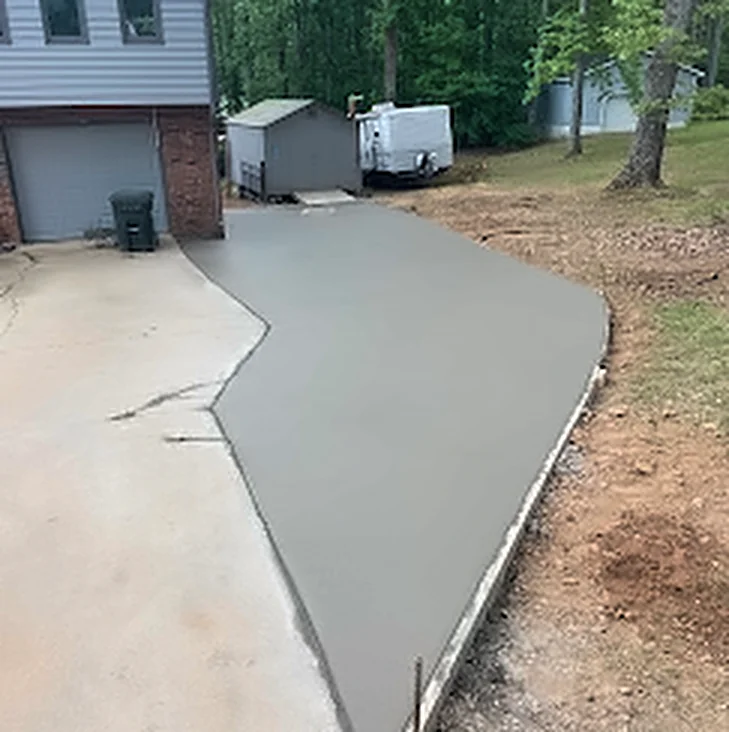
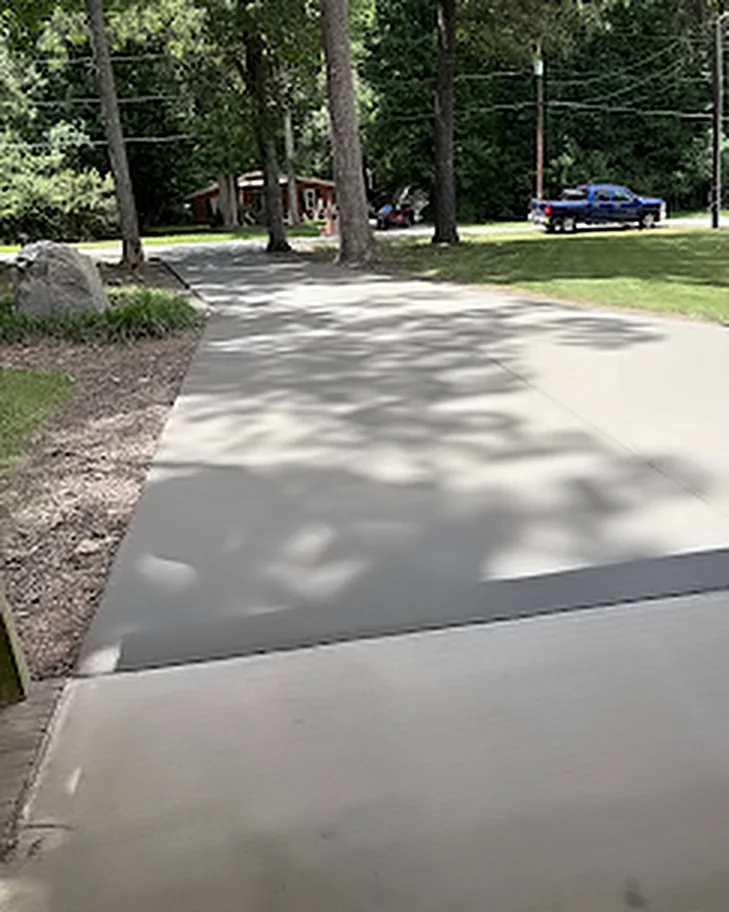
A driveway is the first thing anyone sees
It is also the slab that gets the most use. Cars park on it every day. Trucks back up on it. Rain runs across it all year. PressCrete pours driveways for families at their house and for builders putting up new ones.
We form it, pour it and finish it, from the street apron up to the garage door. The grade gets set first, so water runs to the street instead of standing on the slab or running at your garage.
How we pour a driveway
- Tear-out and grading. If there is an old driveway, it comes out. Then we cut the grade so the new slab drains the right way.
- Gravel base. A compacted gravel base goes under the whole slab. This is what keeps a driveway flat for years.
- Forms and steel. We set the forms to the shape you want, straight or curved, and lay in wire mesh or rebar.
- The pour. Four inches for cars and pickups. Five or six if a camper, a dump truck or an RV is going to park on it.
- Finish and joints. A broom finish for grip in the rain, then control joints cut so any crack lands in a straight line.
Old houses and new builds
We pour driveways at houses that have been there for years and at houses that are still going up. The photos on this page show both. On a wooded lot or a slope, the grade is set so the drive stays put and the water runs off.
What changes the price
The size, the thickness, whether an old driveway has to come out, how much dirt has to move, and how easy the spot is to reach. Tell us what will park on it and we size it for that. We come out, look at it and give you a number.
Driveways we have poured
Driveways: the questions we get
How thick should a concrete driveway be?
Four inches is the normal thickness for cars and pickups. If a dump truck, a camper or an RV is going to park on it, five or six inches is the safer call. Tell us what is going to sit on the slab and we will size it for that.
Can you pour a new driveway over my old one?
Usually the old one comes out. New concrete poured over cracked concrete follows the old cracks. Tearing out and starting on a fresh gravel base costs more up front and lasts a lot longer.
How long does a driveway take?
Most driveways are formed and poured in a day or two. Then the concrete needs about a week before a car should drive on it. Rain, a hard freeze, or a lot of dirt to move can add a day.
What keeps water off a driveway?
The slope. We set the grade before the pour so rain runs to the street or a drain instead of pooling on the slab or running at the garage door. Water that sits on concrete through a winter is what breaks the surface up.
Ready for a price?
Call, text, or send the job. We come out, look at it and give you one price.
Based in Thomasville, NC. We pour in High Point, Lexington, Archdale, Trinity, Winston-Salem, Greensboro and anywhere else the job is.